.png?width=601&height=601&name=ADEOJE%203D%20STUDIO%20(1).png)
3d industrial animation

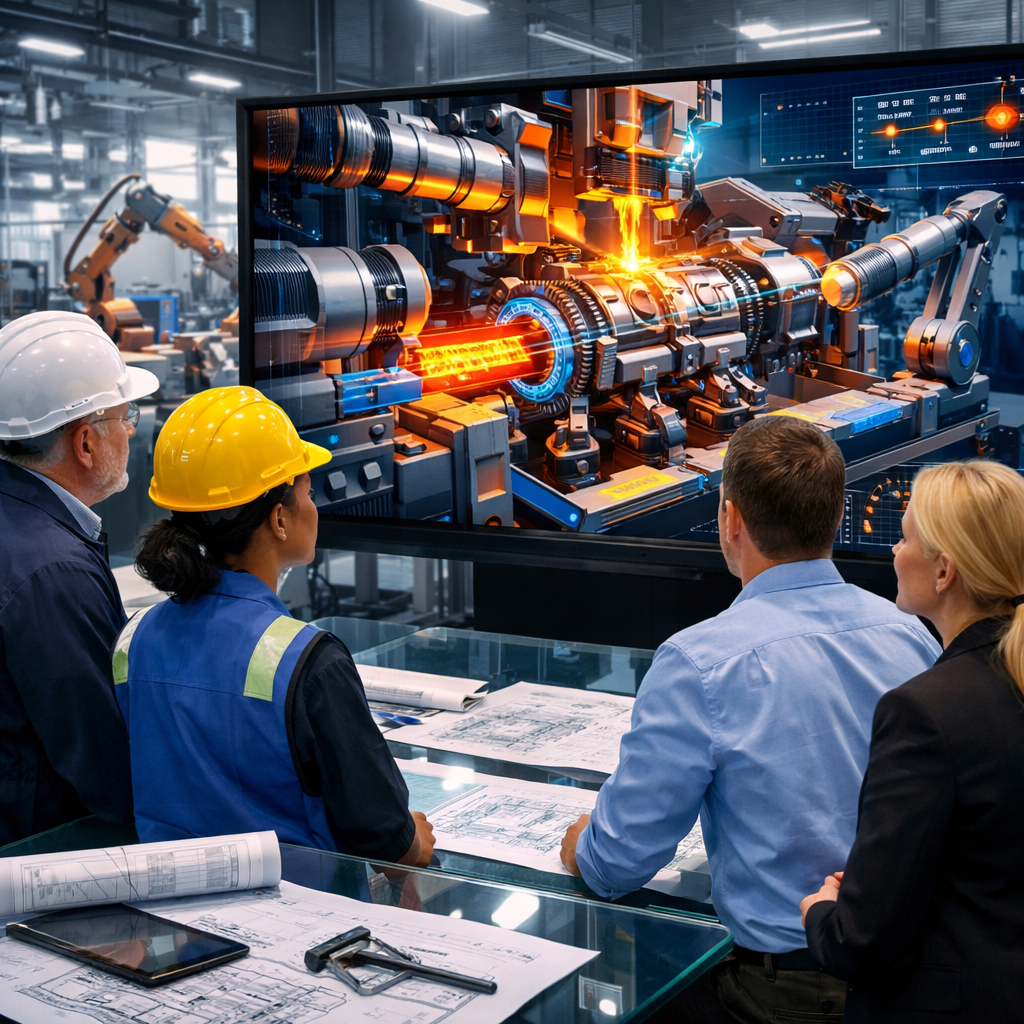
Discover how leading manufacturers are transforming complex industrial processes and products into compelling visual stories that accelerate sales cycles, reduce training costs, and revolutionize stakeholder communication.
In today's industrial marketplace, explaining the intricacies of heavy machinery, complex manufacturing systems, or sophisticated engineering processes through static images and technical specifications alone no longer cuts it. Decision-makers expect visual clarity. Investors demand compelling presentations. Customers need to understand what they're buying before committing to six- or seven-figure purchases.
Industrial 3D animation has emerged as the solution that bridges the gap between technical complexity and audience comprehension. By translating intricate mechanisms, production workflows, and product functionality into dynamic visual narratives, manufacturers are transforming how they communicate with every stakeholder—from shop floor technicians to C-suite executives.
This isn't about flashy graphics or entertainment value. Industrial 3D animation serves a strategic business function: it reduces misunderstanding, shortens sales cycles, improves training outcomes, and elevates how professional audiences perceive your brand and capabilities.
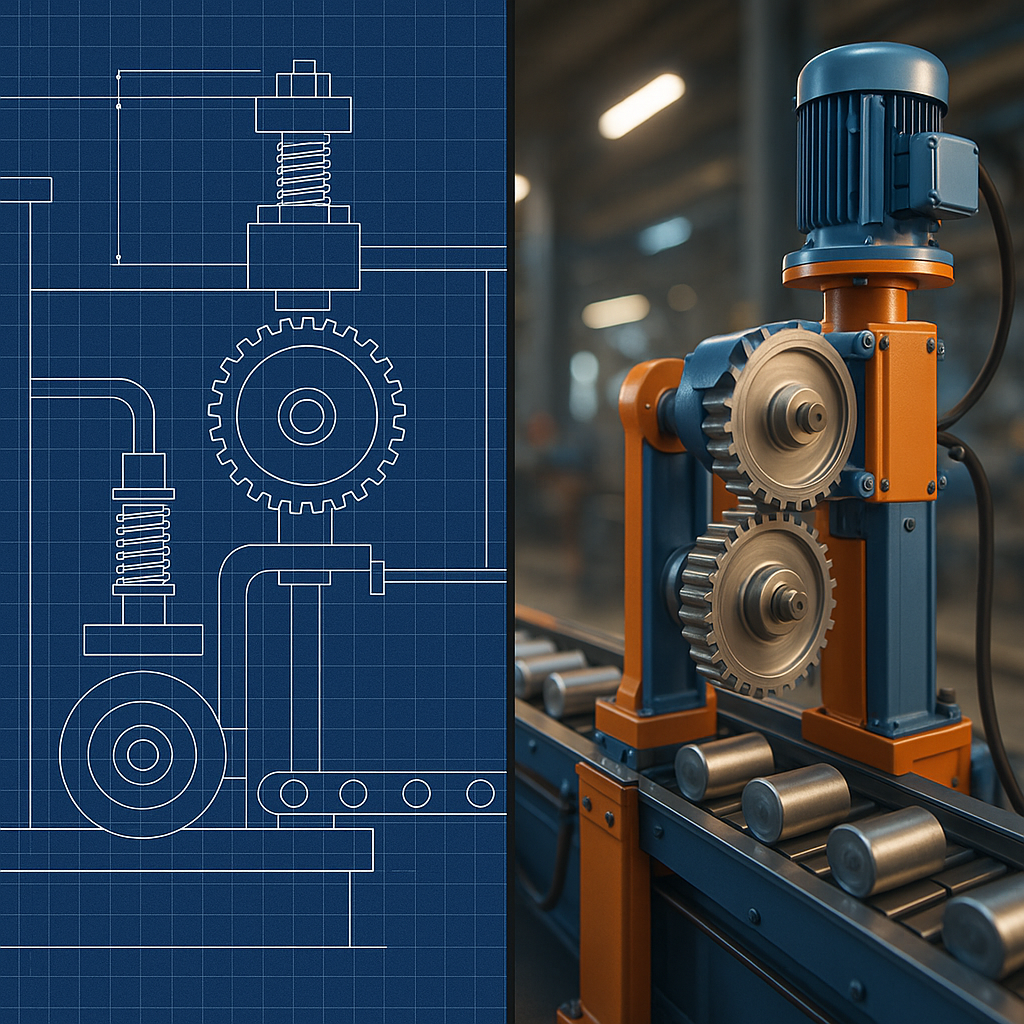
Industrial 3D animation converts engineering blueprints, CAD files, and technical specifications into photorealistic or stylized visual representations that reveal how products actually work. Unlike traditional photography or videography, 3D animation can show internal mechanisms, demonstrate products that haven't been built yet, or illustrate processes that occur too quickly, too slowly, or in environments too dangerous to film.
For manufacturers of equipment like CNC machines, hydraulic systems, or automated assembly lines, animation allows potential buyers to see precisely how components interact, how maintenance procedures work, and how the product integrates into existing operations. The camera can move through impossible angles, components can become transparent to reveal inner workings, and complex sequences can be broken down step-by-step.
This level of visual clarity transforms technical communication. Engineers no longer need to rely solely on cross-sectional diagrams or lengthy written descriptions. Sales teams can demonstrate products that exist only as prototypes. Marketing departments can create compelling content that actually explains value rather than simply making aesthetic claims.
What distinguishes professional industrial animation from generic visualization is accuracy and attention to engineering detail. Every bolt, valve, sensor, and moving part must be modeled correctly. Tolerances, materials, and physical behaviors need to reflect reality. This requires collaboration between 3D artists and subject matter experts who understand the actual industrial applications.
Traditional sales processes in industrial sectors often involve lengthy site visits, expensive prototype demonstrations, and multiple rounds of technical clarification. Industrial 3D animation compresses these timelines by providing prospects with comprehensive product understanding before conversations even begin.
A well-executed product animation allows potential customers to visualize scale, understand operational flow, and assess integration requirements from their own offices. Sales teams can share animations via email, embed them in proposals, or present them during virtual meetings. This front-loads technical education and qualification, ensuring that conversations focus on business terms rather than basic functionality questions.
For capital equipment sales where purchase decisions involve multiple stakeholders across engineering, operations, finance, and executive leadership, animations create a common visual reference point. A three-minute animation can communicate what might take hours to explain through technical documentation, and it does so in a format that non-technical decision-makers can grasp immediately.
Manufacturers also use animation to differentiate their offerings in competitive bidding situations. When specifications appear similar on paper, a compelling visual demonstration of superior design, easier maintenance, or better safety features creates memorable distinction. This is particularly valuable in industries where innovation happens incrementally—animation can highlight improvements that might otherwise go unnoticed.
The ROI on sales-focused animation becomes evident when companies track metrics like qualified lead conversion rates, proposal win rates, and average time from initial contact to closed deal. Organizations consistently report that high-quality product animations reduce technical objections and accelerate consensus among buying committees.
Training industrial technicians, operators, and maintenance personnel on complex equipment presents persistent challenges: equipment downtime for training purposes is expensive, hands-on practice with dangerous machinery carries risks, and traditional manuals fail to convey three-dimensional spatial relationships effectively.
3D animation addresses these challenges by creating safe, repeatable learning environments. Trainees can watch assembly procedures from multiple angles, see exactly how components should align, and observe maintenance sequences in proper order—all without taking production equipment offline or exposing learners to hazards.
Animation is particularly valuable for safety training. Visualizing proper lockout-tagout procedures, demonstrating correct PPE usage in specific scenarios, or showing the consequences of procedural failures creates stronger learning retention than text-based instruction. When workers can see exactly what happens when safety protocols are ignored, compliance improves measurably.
For global manufacturers, animated training content solves localization challenges more efficiently than repeatedly filming live-action training videos. Voiceover and text elements can be adapted to multiple languages while the core visual content remains consistent, ensuring standardized training across facilities in different countries.
The effectiveness of animation-based training shows up in reduced onboarding time, fewer operational errors, decreased equipment damage from improper use, and improved safety metrics. Organizations can also update animated training content more cost-effectively than reshooting video when equipment or procedures change.
Engineers often face the challenge of explaining sophisticated technical concepts to audiences without engineering backgrounds—investors evaluating manufacturing expansion proposals, municipal officials reviewing infrastructure projects, or company leadership deciding on R&D investments.
Industrial 3D animation translates engineering documentation into presentations that non-technical stakeholders can understand and evaluate. A wastewater treatment facility upgrade becomes a clear visual sequence rather than a maze of P&ID diagrams. A proposed automated production line transforms from abstract CAD files into a tangible vision of future operations.
This visualization capability is especially powerful during the project approval phase. When seeking capital investment, engineering teams using animation can demonstrate not just what they want to build, but why the design choices matter, how the solution addresses specific operational challenges, and what the end result will look like in operation.
Animation also facilitates better collaboration during the design phase itself. When multidisciplinary teams—mechanical engineers, electrical engineers, process engineers, and operators—can see a unified 3D representation of a proposed system, they identify potential conflicts, optimization opportunities, and practical implementation issues earlier in the development cycle.
For companies pursuing patents or presenting technical innovations at industry conferences, animation provides a medium to showcase IP in ways that protect competitive advantages while still communicating value. You can demonstrate capability and innovation without revealing proprietary manufacturing details or exact specifications.
Forward-thinking manufacturers approach industrial 3D animation as a strategic asset rather than a one-time marketing expense. The same animated models created for a product launch can be repurposed for training materials, integrated into AR applications for field service, or adapted for trade show presentations—multiplying value across the organization.
Quantifying ROI involves tracking both hard metrics and qualitative improvements. Hard metrics include reduced prototype costs, shorter sales cycles, decreased training time, lower equipment damage rates, and improved proposal win rates. Qualitative benefits encompass enhanced brand perception, improved internal communication, and stronger competitive positioning.
The technology driving industrial animation continues to advance. Real-time rendering engines now enable interactive 3D experiences where users can manipulate virtual equipment, change configurations, or explore different operational scenarios. Virtual reality applications allow prospects to experience factory layouts at full scale before construction begins. Augmented reality overlays bring animated assembly instructions directly into technicians' fields of view.
As these technologies mature and become more accessible, the distinction between companies that leverage advanced visualization and those that rely on traditional communication methods will grow more pronounced. Organizations that invest in building libraries of accurate 3D assets position themselves to quickly adopt emerging presentation technologies as they become business-relevant.
The competitive advantage goes beyond the technology itself—it's about the mindset of treating visual communication as a core business capability rather than an occasional add-on. Manufacturers who recognize that clear, compelling visualization directly impacts revenue, safety, and operational efficiency are building internal competencies or establishing relationships with specialized studios that understand industrial applications.
Industrial 3D animation has evolved from a novel marketing tool to a fundamental business asset for manufacturers and industrial companies competing in increasingly complex global markets. The ability to visualize what words struggle to describe, to demonstrate what cameras cannot capture, and to teach what hands-on practice cannot safely provide has become essential for organizations serious about communication effectiveness.
Whether your goal is shortening sales cycles for capital equipment, standardizing training across global facilities, securing stakeholder approval for major projects, or differentiating your products in competitive markets, professional 3D animation delivers measurable business results. The investment pays returns across multiple departments and over extended timeframes as animated assets serve marketing, sales, training, and engineering functions simultaneously.
At Adeoje 3D Studio, we specialize in creating industrial animation that meets the exacting standards of engineering-driven organizations. Our team understands that accuracy matters, that technical details cannot be approximated, and that industrial audiences demand substance over style. We work directly with your engineers and subject matter experts to ensure every animation we produce serves genuine business objectives and accurately represents your products and processes.
If your company is ready to transform how you communicate technical complexity, demonstrate product value, or train your workforce, we invite you to contact Adeoje 3D Studio. Let's discuss how industrial 3D animation can address your specific communication challenges and contribute to measurable business outcomes.